
Left alone for even a few seasons, Middle Tennessee ground disappears under briars, honeysuckle, cedar seedlings and sapling thickets. Brush clearing knocks that growth back so a property can be seen, walked, mowed and put to use again.
Around Cookeville, brush-clearing requests range from a fenceline gone wild to entire parcels that have not been touched in a decade.
Common Brush-Clearing Situations
- Recently purchased property too overgrown to walk or survey
- Field edges and fencerows swallowed by cedar and briars
- Vacant lots cited for overgrowth or attracting dumping
- Home sites where brush crowds the yard, drive or outbuildings
- Hunting ground that needs shooting lanes and access opened
How Brush Gets Cleared
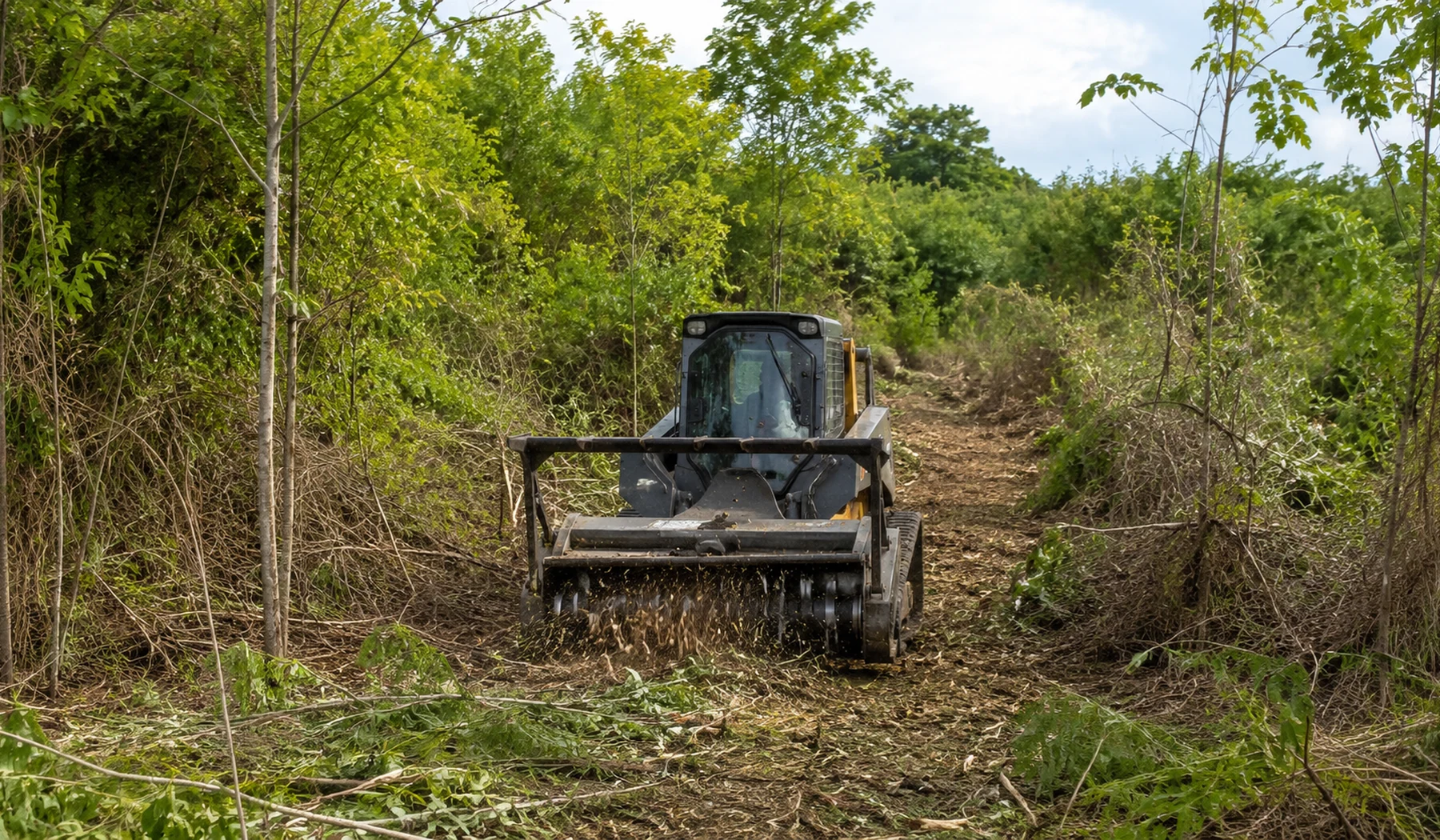
Light brush may only need heavy-duty rotary cutting. Thicker growth with woody stems and saplings typically calls for a forestry mulcher or a skid steer with a cutting attachment, and mixed jobs sometimes bring in an excavator for grubbing. The method determines what the ground looks like afterward — mowed stubble, mulched cover or bare grubbed soil — so the intended use matters as much as the brush itself.
Keeping Brush from Coming Back
One pass rarely ends the fight. Brush regrows from roots and seed, so many owners plan on periodic re-mowing, follow-up mulching or converting cleared ground to pasture or lawn that gets regular maintenance. A contractor can advise what maintenance the cleared ground will realistically need.