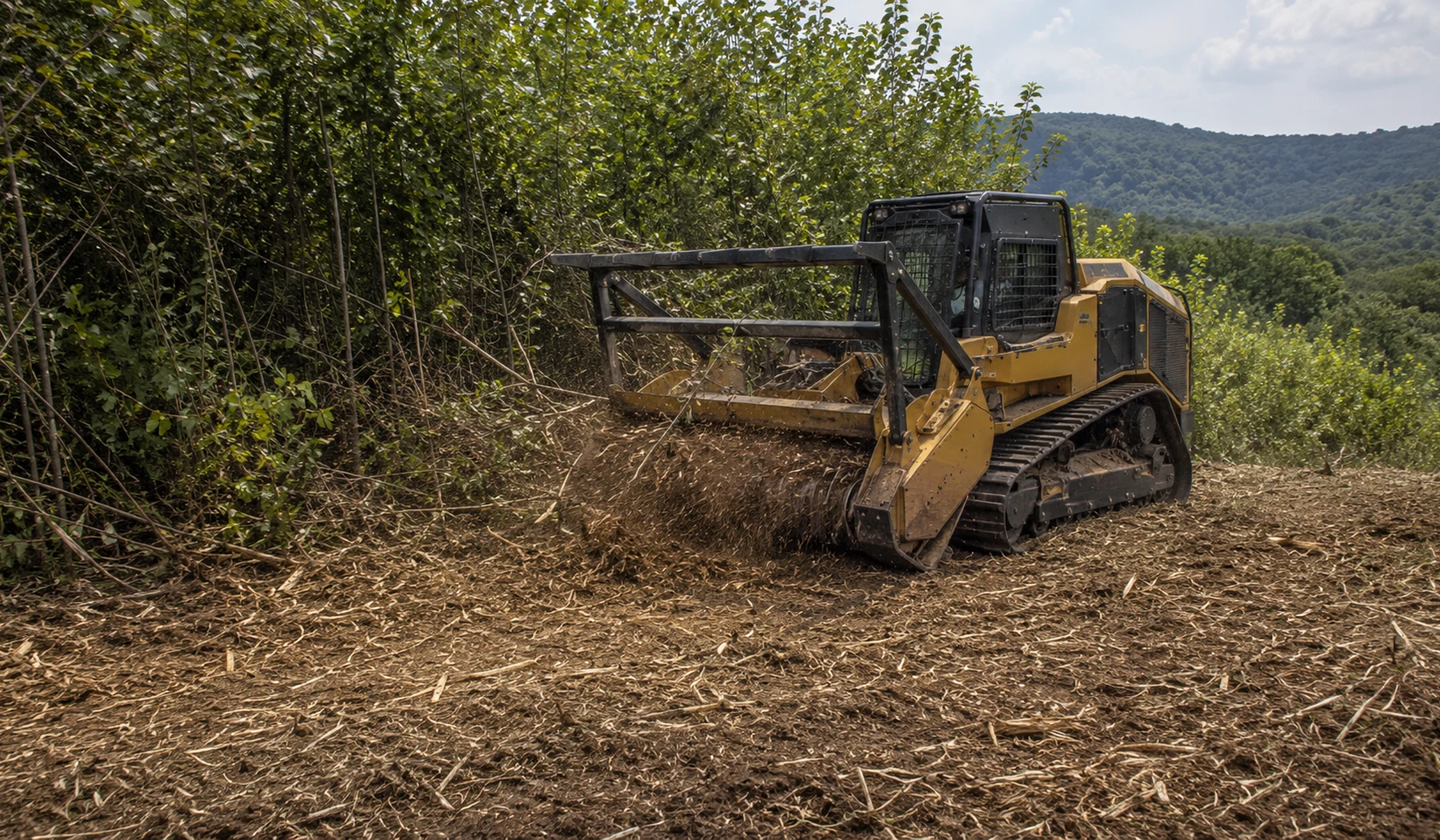
Forestry mulching uses a tracked machine with a drum mulching head to grind standing brush, saplings and small trees into mulch where they stand. Instead of push-piles, burn piles and hauling, the vegetation is processed in place and left as a ground cover.
Around Cookeville and Putnam County, mulching is a popular fit for overgrown acreage, cedar encroachment, fence lines, trail corridors and properties where the owner wants the land opened up without stripping the topsoil.
Where Forestry Mulching Works Well
- Dense brush, briars, vines and sapling thickets on rural acreage
- Cedar and undergrowth creeping into pasture edges
- Opening view corridors and walking access through wooded parcels
- Clearing fence lines, trail routes and property boundaries
- Knocking back regrowth on land that was cleared years ago
What Mulching Leaves Behind
A mulched area is left covered in shredded organic material rather than bare dirt. That layer helps limit erosion and washing, breaks down over time, and can usually be driven or walked over immediately. Because the machine works above the soil, root systems and stumps near ground level generally remain — which is fine for access and aesthetics, but matters if the ground is headed for construction.
Mulching vs. Traditional Clearing
Mulching shines when the vegetation is brush-to-small-tree sized and the goal is usable, open land. Traditional clearing with dozers and excavators is usually the better call when large trees must come out, stumps and roots need removal, or grading follows the clearing. Many projects combine both. The comparison depends on your site — vegetation size, terrain, access, and how the land will be used afterward.
Requesting Forestry Mulching Near Cookeville
Describe the acreage, what is growing on it, the largest tree sizes involved, and how you want the property to function afterward. Wide photos of the vegetation and the entrance are especially helpful, since mulching machines arrive by trailer and need workable access.