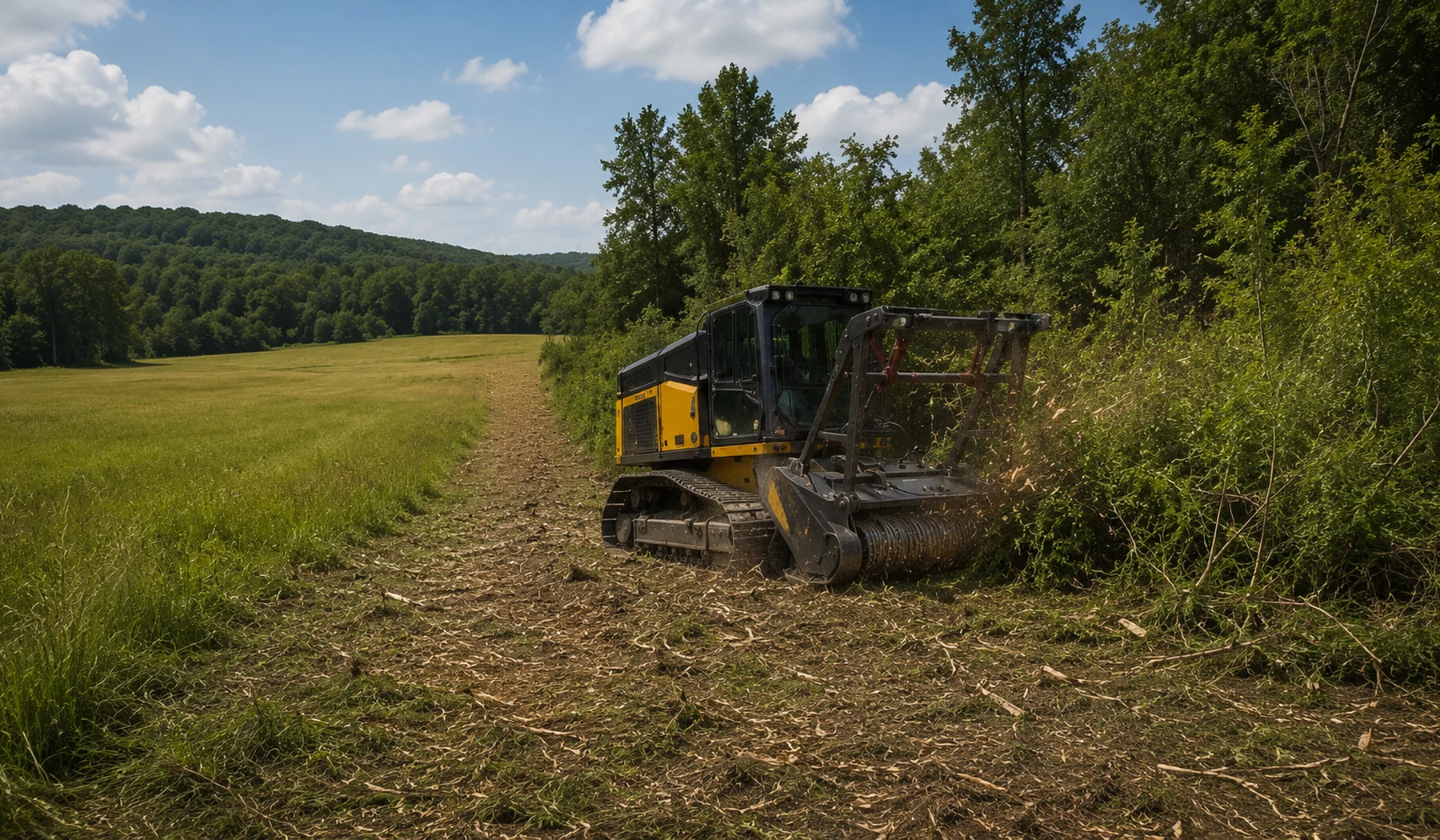
Pasture that goes unmowed for a few seasons starts to disappear — cedar seedlings, blackberry, sumac and sapling regrowth move in from the fencerows until the field is more thicket than grass. Pasture reclamation reverses that process and returns the ground to grazing or hay production.
Across the farms of Putnam, White, Overton, DeKalb and Cumberland counties, reclamation is one of the most requested acreage projects in the region.
Signs a Field Is Ready for Reclamation
- Cedar and sapling stems too thick for a bush hog to handle
- Blackberry, briar and sumac colonies spreading from field edges
- Shrinking usable acreage and grazing capacity year over year
- Fence lines no longer visible or maintainable
- Volunteer trees maturing in what used to be open field
How Reclamation Work Is Typically Done
Light encroachment may be handled with heavy rotary mowing. Once woody stems pass what a mower tolerates, forestry mulching becomes the usual tool — it grinds cedar and saplings to ground level and leaves a mulch layer that breaks down into the field. Heavier regrowth with established trees may call for mulching plus selective removal, and badly rutted or eroded ground can need smoothing afterward.
The end goal shapes the method: ground returning to hay production needs a smoother, cleaner finish than ground used for rough grazing.
After the Brush Is Gone
Reclaimed pasture stays reclaimed only with follow-up — regular mowing, grazing pressure or reseeding into a maintained stand. Many owners schedule a follow-up mulching pass a year later to knock back regrowth from roots and seed. Ask the contractor what maintenance the specific vegetation on your ground will need.