Some projects only need vegetation knocked down; others need it gone — roots and all. Stump and tree clearing covers the heavier end of land clearing: felling and removing unwanted trees, pulling or grinding stumps, and grubbing root systems where the ground is headed for construction, pasture smoothing or pond work.
When Stumps and Roots Have to Go
- Building footprints, driveways and septic areas — buried wood settles
- Pond basins and dam footprints
- Fields that will be smoothed, worked or finish-mowed
- Lots where visible stumps interfere with mowing and use
- Grade changes where roots would surface later
Removal Methods
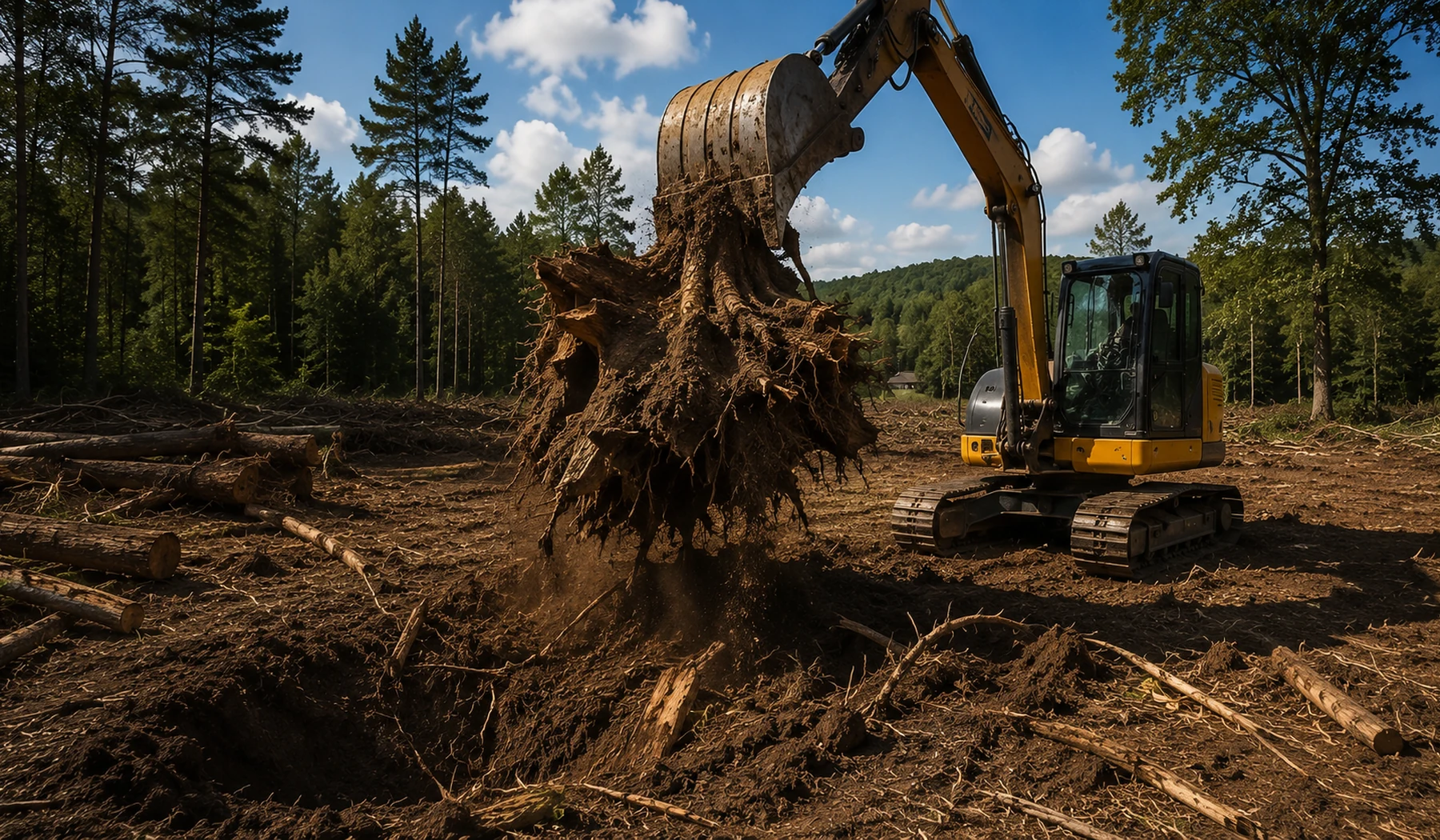
Stump grinding chews the stump below grade and suits lawns and areas staying in place; the roots remain and the chips fill the hole. Excavator grubbing removes the stump and root ball entirely, which construction and pond work usually demand, but disturbs more soil and produces material to dispose of. Whole-tree removal combines felling with grubbing in one operation. The intended use of the ground picks the method — and the price difference between them is significant.
Debris and Backfill
Grubbed stumps are bulky and do not burn easily, so plan for hauling or an approved onsite disposal area. Holes left by root balls need backfill and compaction if the ground will be built on or mowed. Include your finish expectations in the request so the scope covers the last step, not just the extraction.