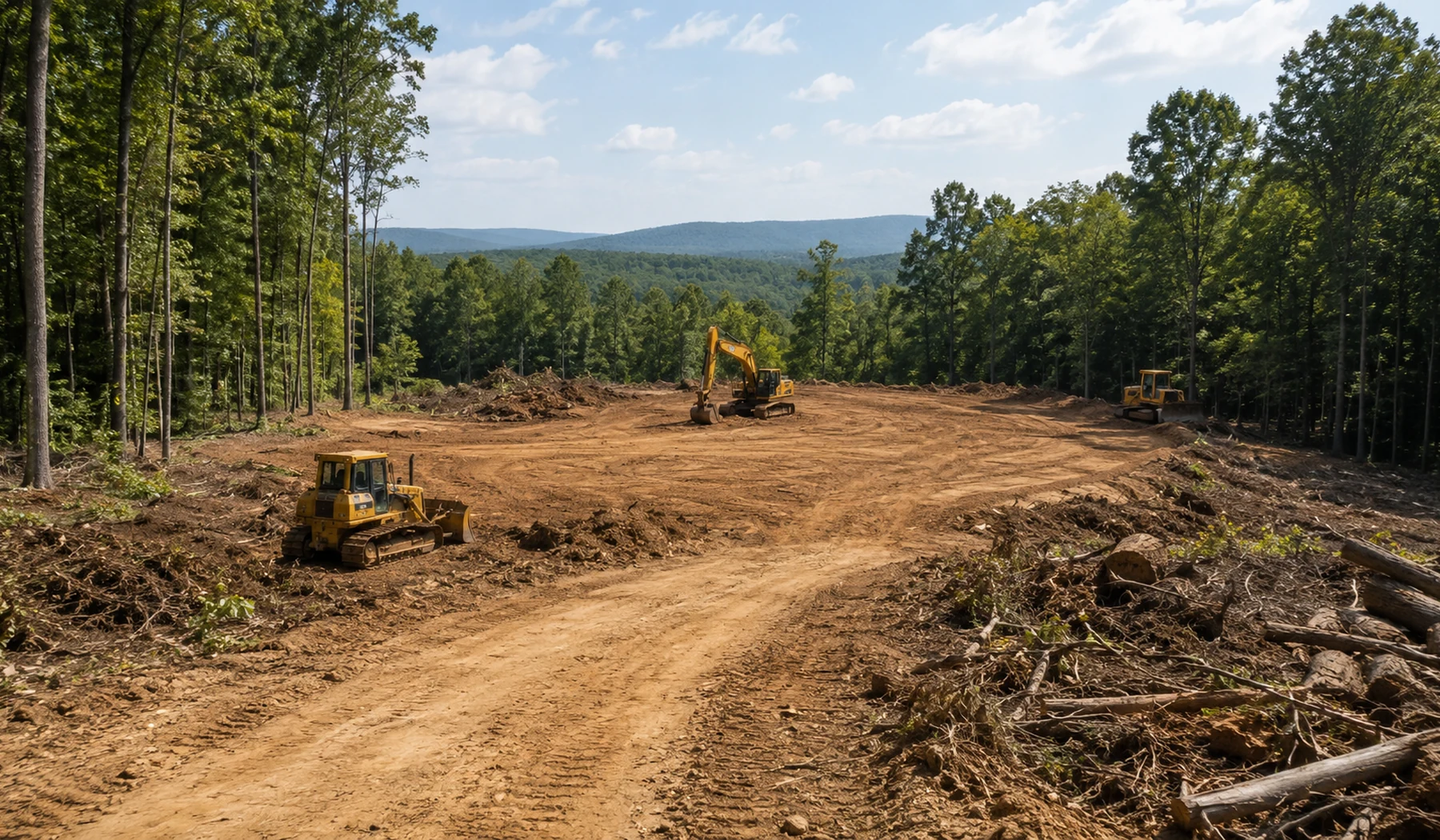
Lot clearing prepares a specific building footprint — usually a residential or rural homesite — for what comes next: driveway access, utilities, foundation work and construction traffic. It is more surgical than large-acreage clearing and often happens close to property lines, existing homes and streets.
With steady residential growth in Cookeville, Algood and the surrounding county, wooded infill lots and rural mini-tracts are some of the most common clearing requests in the area.
What Lot Clearing Typically Covers
- Removing trees, brush and stumps from the building footprint
- Opening a construction entrance and driveway corridor
- Clearing utility routes for water, power and septic
- Selective clearing that preserves chosen shade trees
- Rough grading coordination so the site drains and compacts properly
Lot Clearing Near Neighbors and Streets
In-town and subdivision lots bring constraints rural acreage does not: overhead lines, sidewalks, neighboring structures, tight equipment access and rules about debris burning. Contractors plan felling direction, debris handling and machine size around those constraints, which is why lot photos and boundary information matter even for small parcels.
Timing Lot Clearing with Construction
Clearing is the first trade on a build site, and how it finishes affects everyone after it. Communicating the builder’s schedule, the foundation type and any grading plans helps the clearing contractor leave the lot in the condition the next crew expects — including which stumps must be fully removed rather than cut low.