Large parcels are only as usable as their access. Trail clearing cuts corridors through wooded and overgrown ground so owners can actually reach the back of the property — on foot, by ATV or with a truck — for hunting, recreation, timber management or simply checking the land.
On Upper Cumberland ridges and hollows, a well-routed trail also becomes the working access for every future project on the parcel.
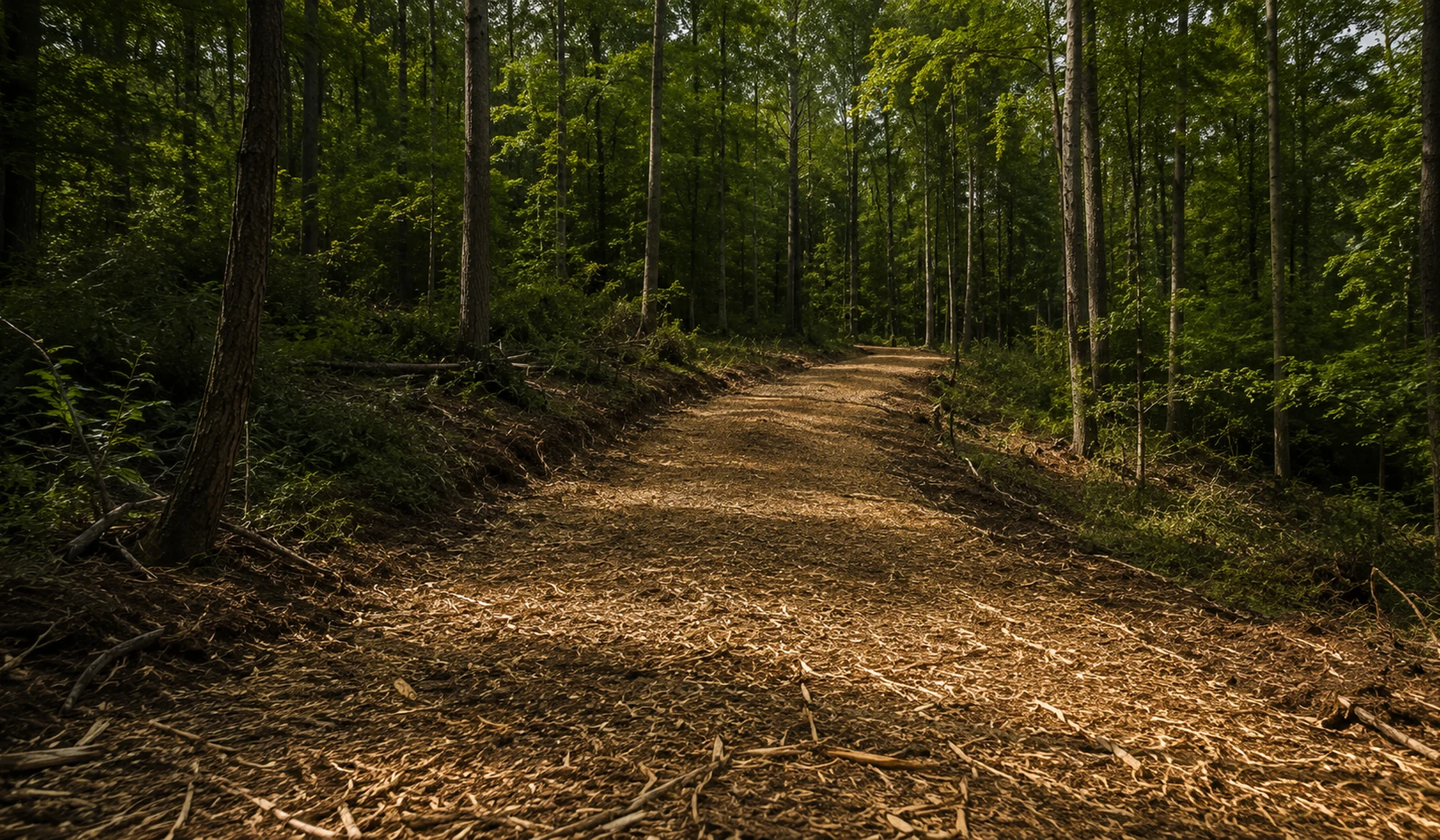
Common Trail Projects
- Hunting access to stands, plots and creek bottoms
- ATV and side-by-side loops through wooded acreage
- Walking and riding trails on recreational land
- Interior access roads for management, firewood and equipment
- Reopening old logging roads and farm lanes grown shut
Routing a Trail That Lasts
The difference between a trail and a future gully is routing. Good trails follow contours where possible, cross slopes rather than running straight down them, avoid seasonal wet spots, and use existing old roadbeds when they are sound. Forestry mulching suits most trail corridors because it leaves a mulch surface that resists erosion, while truck-width access roads may need grading and gravel behind the clearing.
Width and Overhead Clearance
State what will travel the trail: a walking path, an ATV corridor and a pickup route need different widths and overhead clearing heights. Trimming the canopy to the right height at clearing time is far easier than coming back later.