Every pond project starts as a clearing project. Before an excavator shapes a basin and dam, the footprint has to be stripped of trees, brush, stumps and roots — organic material left in a dam or basin decays, settles and leaks.
This page covers requesting the clearing and excavation side of a pond project on Upper Cumberland farms and rural acreage.
What Pond-Site Preparation Involves
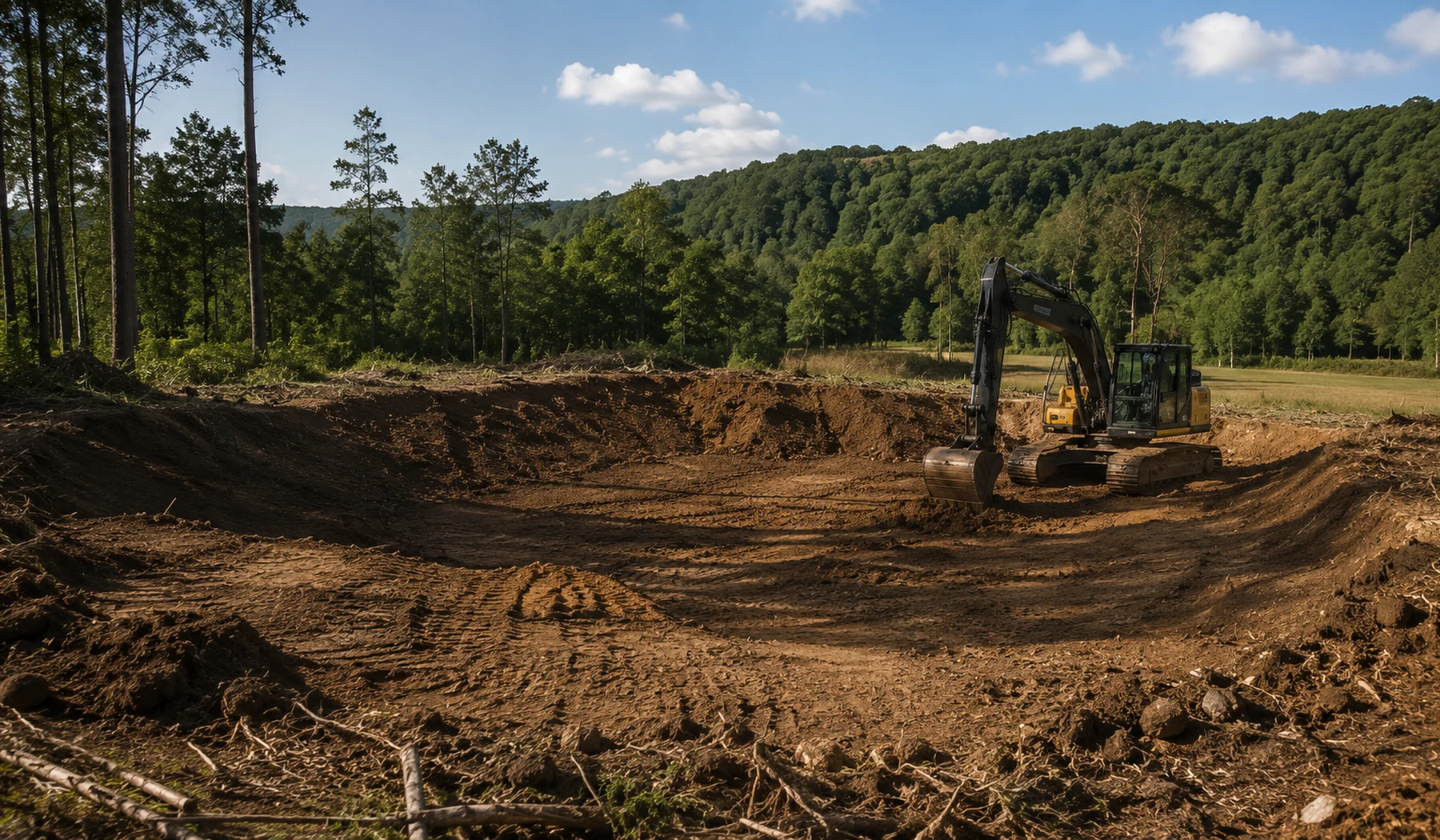
- Clearing trees and brush from the basin, dam footprint and spillway route
- Removing stumps and root systems — not just surface vegetation
- Opening equipment access wide enough for excavators and dump trucks
- Clearing staging areas for spoil and topsoil
- Establishing work room around the banks for shaping and seeding
Why Ponds Need More Than Mulching
Forestry mulching alone is rarely sufficient for a pond footprint, because mulching leaves roots and near-grade stumps in place. Material under a dam or in the sealed basin must come out, which means grubbing with excavation equipment. Mulching still plays a role — it is often the efficient way to open access and clear the surrounding area outside the actual water line.
Site Factors a Contractor Will Evaluate
Requirements for pond construction can vary by location and project scale, so contractors typically evaluate the specific site — and any approvals it may need — before committing to a design.
- Watershed and where the pond’s water will come from
- Soil type and whether the site will hold water
- Slope, dam height and spillway routing
- Overflow path and downstream considerations
- Access for heavy excavation equipment and hauling